A driveway is the biggest slab most homeowners ever pay for and the one that takes the most abuse — cars, sun, winter rain, and on the Peninsula, salt air. This page covers what the job actually involves, what it costs in Salinas and Monterey County right now, the thickness and drainage decisions that matter on the Central Coast, and how to compare quotes from licensed contractors. We're a matching service, not a contractor; when you're ready, we'll connect you with licensed CSLB C-8 contractors who work in your city.
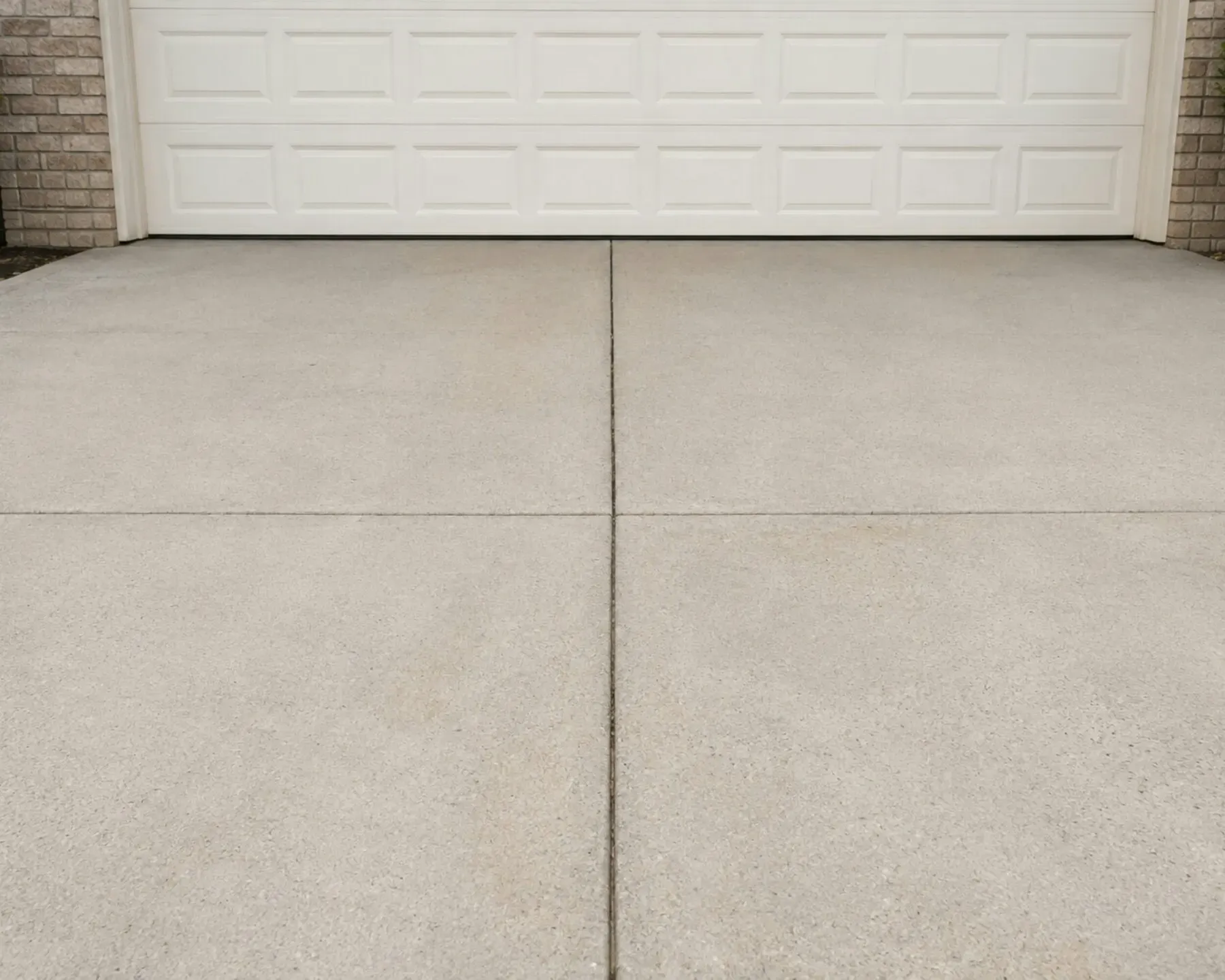
What a concrete driveway costs in Salinas (September 2026)
| Item | Installed cost | Typical 600 sq ft job |
|---|---|---|
| Plain concrete driveway (4 in.) Broom finish, standard 4-inch slab, installed | $8–$15 per sq ft | $4,800–$9,000 |
| Heavy-duty 6 in. slab For RVs, trucks, or trailers | $8–$20 per sq ft | $4,800–$12,000 |
| Exposed-aggregate finish | $10–$18 per sq ft | $6,000–$10,800 |
| Stamped / decorative concrete One pattern, one integral color, sealed | $12–$20 per sq ft | $7,200–$12,000 |
| Tear-out of an existing driveway Added when replacing, not building new | $2–$6 per sq ft | $1,200–$3,600 |
The plain range covers a standard 4-inch broom-finish slab with a compacted base and control joints, installed. Nationally, HomeAdvisor's typical range is $2,700–$14,500 with an average of $6,400; Salinas-area quotes tend toward the middle and upper part of that band because Central Coast labor runs above the national average. Every figure here comes from our cost guide, which lists the sources and the date they were checked.
What moves the price
-
Tear-out of the old driveway
Demolition, loading, and disposal add $2–$6 per sq ft — often the single biggest add-on for a replacement job.
-
Thickness
Four inches for cars; six inches ($8–$20 per sq ft) with rebar or mesh for RVs, trailers, and work trucks.
-
Finish
Broom finish is the baseline. Exposed aggregate ($10–$18 per sq ft) and stamped or colored finishes ($12–$20 per sq ft) add material and skilled labor.
-
Drainage
Slope toward the street, a drain at the garage, or a channel drain across the approach — cheap now, expensive to retrofit.
-
Permit and approach
A new or widened curb cut sits in the public right-of-way and generally needs a city permit and inspection.
-
Grading and base
A sloped lot, soft soil, or a driveway being widened onto un-compacted ground needs more prep before the pour.
What's involved: the job step by step
- Site visit and layout. The contractor measures, checks slope and drainage, looks at where water goes now, and asks what you park. This is when thickness and finish get decided.
- Permit (if needed). Work in the right-of-way — the approach and curb cut — typically needs a permit from your city. The contract should say who pulls it.
- Demolition and haul-away. The old slab or asphalt is broken up and removed; roots that heaved it are cut back.
- Grading and base. The subgrade is cut or filled to the right slope, then a gravel base is placed and compacted. Skipping compaction is the most common cause of a driveway that settles in a year.
- Forms and reinforcement. Lumber forms set the edges and the finished height; rebar or wire mesh goes in for 6-inch slabs and anywhere heavy loads sit.
- Pour and finish. Concrete is placed, screeded level, floated, and given its finish — broom for grip, or a decorative treatment. Control joints are cut or tooled every 8–12 feet to steer cracking.
- Curing. Keep it damp and off it for a week before parking; full strength takes about 28 days.
Concrete vs. pavers vs. asphalt on the Central Coast
Homeowners in Salinas and Monterey usually weigh three options. Here's the honest comparison for this climate — mild, wet winters, dry summers, fog most mornings, and a hard freeze only rarely:
- Concrete — $8–$15 per sq ft plain. Lowest maintenance of the three, 25–40 year service life when the base is right. Its weakness is that a crack is permanent; its strength is that with rare freezes, the main crack driver here is drainage and settling, both of which a good contractor controls.
- Pavers — typically the highest up-front cost. Individual units can be lifted and reset after root or settling movement, and the look is hard to beat. Joints need sand and occasional weeding, and cheap installs shift.
- Asphalt — cheapest to install, but it needs seal-coating every few years, softens in summer sun, and shows tire marks. Common on long rural driveways in the Salinas Valley where cost per foot dominates.
If you want the paver look at closer to concrete money, stamped concrete at $12–$20 per sq ft is the usual middle path.
Drainage and soil: what matters locally
Because hard freezes are uncommon here, the freeze-thaw damage that drives driveway replacement in colder states is mostly not the issue. Water is. Winter rain that ponds against a garage slab, a driveway that slopes toward the house, or a base that stays saturated will crack and settle a slab faster than anything else. Ask every contractor how the finished driveway will shed water and whether a drain at the garage door is warranted. Parts of the Salinas Valley also have clay-rich soils that swell when wet and shrink when dry; a contractor who knows the area will talk about base depth and compaction for your lot without being asked. Near the bay, salt air is the other local factor — it's hard on rebar if the slab cracks and on any decorative finish left unsealed.
How to vet a driveway contractor in Monterey County
-
Active CSLB C-8 license
Concrete work requires a C-8 Concrete Contractor license. Look the number up on cslb.ca.gov before you sign — our walkthrough shows exactly how.
-
License number on the ad and the contract
California requires it (B&P Code § 7030.5). A contractor who won't put it in writing is a red flag.
-
Thickness and reinforcement in writing
The quote should state slab thickness, base depth, and whether rebar or mesh is included — not just "driveway, 600 sq ft."
-
A drainage plan
Ask where water goes. If the answer is a shrug, keep looking.
-
Control joint spacing
Joints every 8–12 feet, cut within a day of the pour. It's the difference between cracks you planned and cracks you didn't.
-
Beware the too-cheap bid
A quote far below $8–$15 per sq ft usually means thin concrete, no base compaction, or an unlicensed crew — all of which cost more within a few years.
See the full CSLB license check walkthrough, and our list of licensed C-8 contractors based in Salinas.
Red flags
- No license number on the website, business card, or estimate.
- A large cash deposit demanded up front. California law caps a home-improvement down payment at the lesser of 10% of the contract or $1,000 for licensed contractors.
- No mention of base preparation or compaction in the quote.
- "We'll just pour over the old driveway." Overlays have their place in resurfacing, but a new driveway poured over a failed slab inherits its problems.
- A start date "tomorrow" with no permit discussion for a curb cut.
Serving Salinas, Monterey, Seaside, and Marina
We match homeowners across the four-city area with licensed, independent contractors. City-specific notes are on our Monterey, Seaside, and Marina pages; Salinas itself is covered throughout this site.
Weighing concrete against another material? See our concrete vs. pavers guide. Every new driveway approach also needs a city encroachment permit and a call-before-you-dig notice before excavation starts.